


This collection contains oral histories pertaining to life and events in Big Stone County, Minnesota. The oral histories range greatly in topic and time period.
The digitization of these oral histories was made possible in part by the people of Minnesota through a grant funded by an appropriation to the Minnesota Historical Society from the Minnesota Arts and Cultural Heritage Fund. Any views, findings, opinions, conclusions or recommendations expressed in this publication are those of the authors and do not necessarily represent those of the State of Minnesota, the Minnesota Historical Society, or the Minnesota Historic Resources Advisory Committee.
This webpage includes archived web content, which may not meet accessibility standards. To request content in an accessible format, contact the University of Minnesota Morris Archives at [email protected].







-
Errol Anderson Interview, 1976
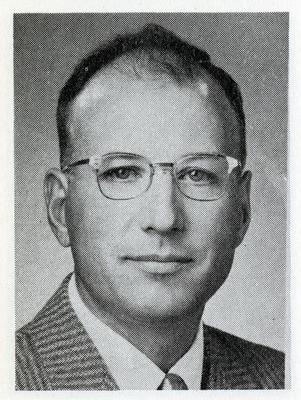
Errol Anderson and Alberta Anderson
Errol Anderson was born on his father's farm in Otrey Township on August 6, 1905. His father, Andrew, emigrated from Sweden in 1869 and homesteaded on June 4, 1884. Errol Anderson was the youngest of 8 children. In 1930, he graduated from the University of Minnesota Agricultural School and from 1935-1943 served as county agent in Ottertail County. After that time, he moved back to his father's farm and farmed the land. He is married with one son.
In this interview, Errol Anderson discusses farming in Big Stone County, primarily from World War I to the time of the interview. A particular emphasis was placed on the 1920s and Depression years. He discusses the Non-Partisan League, the Farm Holiday Movement, as well as the Farm Bureau and Farm Union. He discusses the effect of World War II on the county agent system with a view of the Agricultural Adjustment Administration. Finally he discusses the farm co-operatives in the area, the Rural Electrification Program, and droughts.
-
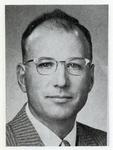
Sam Barr Interview, 1973
Sam Barr
Sam Barr was born in a boxcar in Forsythe, Montana on May 19, 1914 to Samuel Arthur Barr, an itinerant line man with a power company and his wife Julia Cecelia (Weber) Barr. The family returned to Ortonville when Sam was six months old. Sam was educated in Ortonville until illness took him out of school before graduating high school. In the early 1950s Sam became involved in politics. He served 12 years as a representative in the Minnesota State Legislature.
In this interview, Sam Barr discusses his early background and his first involvement in politics in the 1950s. He discusses Bill Sorenson, representative, and Barr's first election to the House. He discusses major issues during his 12 years as a representative, including: sales tax issues, bills sponsored by Barr (small loan industry bill and doctor procurement for rural Minnesota bill), Barr's association with UMN Morris and the establishment of UMN Morris, non-party designated legislature vs. party-type legal issue, a cloud seeding bill, the regard for the Minnesota government and representative Ed Martinson.
-
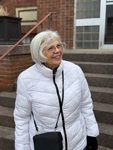
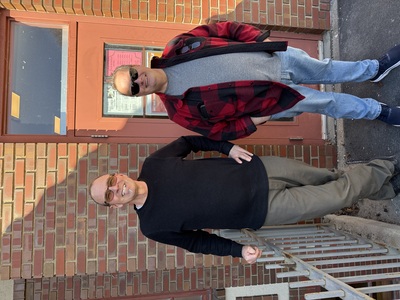
Judy Beckman Interview, 2025
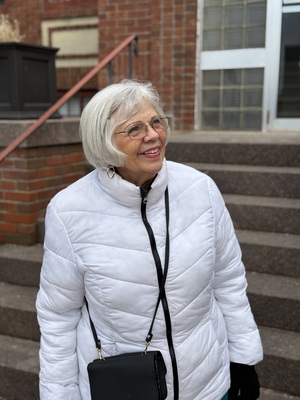
Judy Beckman and Jason Frank
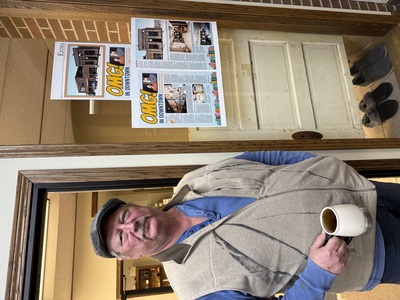
Judy Beckman discusses businesses and Main Street in Ortonville, Minnesota.
-

Loren W. Clark Interview, 1980
Loren W. Clark
In this interview, Loren W. Clark talks about life during World War II. Mr. Clark was born in Big Stone City, South Dakota in 1915. In 1954, he moved to Ortonville, MN. There was a P.O.W. camp in Big Stone City and Mr. Clark discusses this in the majority of the interview.
-
Agnes Cunningham Interview, 1973
Agnes Cunningham
In this interview, Agnes Cunningham discusses her family and personal history, her family in the early days of Big Stone County, school in Big Stone County, the effects of the Depression on teaching, differences in teaching from 1935 to 1955, World War II, and diseases and health problems, including polio.
-
Bert Henningson, Jr. Interview, 1988
Bert Henningson Jr. and Charles McLoughlin
Bert Henningson, Jr. grew up on a farm east of Graceville, Minnesota. In this oral history, he discusses his political activism and career in agriculture and politics. He discusses the National Farmers Organization and his time working for Representative Bob Bergland and Representative Rick Nolan. He discusses the Department of Agriculture, the tractorcade protest by the American Agriculture Movement, Groundswell, the farm foreclosures of the 1980s, and farm politics.
-
Ora Hills Interview, ca. 1978
Ora Hills
Ora Hills was 78 years old and was a lifetime resident of Beardsley, Minnesota.
In this interview, he discusses farming, horses in farming, and some of the big storms of the past. He also talks about the custom combining work he used to do down south.
-
Peter Jensen Interview, ca. 1972
Peter Jensen
In this interview, Peter Jensen discusses Lake Traverse boat traffic, grain elevators, commerce on Lake Traverse, and experiences of a boat captain.
-

Rodger Jeska Interview, 2025
Rodger Jeska and Mark Denson
Rodger Jeska discusses his car mechanic business in Ortonville, Minnesota, as well as the use of the space for Alcoholics Anonymous meetings.
-
Wilmar A. Johnson Interview, ca. 1977
Wilmar A. Johnson
Wilmar A. Johnson's parents came from Sweden and he spent most of his life farming. He grew up near Graceville, Minnesota.
In this interview, he discusses the prices of equipment and crops, including during the Depression. He also talks about changes in farming. Finally, he talks about what he does now that he is retired, including jigsaw puzzles and cribbage.
-
Wilmer Johnson Interview, 1975
Wilmer Johnson
Wilmer Johnson was born on June 19, 1907 in Moonshine Township, Big Stone County. He farmed in that area until 1952 at which time he moved to Morris to work with Eames Distributing until his retirement.
In this interview, Wilmer Johnson started by reviewing his life in near decade by decade terms dealing mainly with 1920-1950. He mostly discusses farming and youth. He then spoke of his family's background from Sweden and the new life in western Minnesota near Graceville. Finally, he gave some views on the changing of life for farmers and further recollections of past experiences.
-
Wilhelmina Jost Interview, ca. 1977
Wilhelmina Josephine Jost
Wilhelmina Josephine (Zaehringer) Jost was 83 years old and was born in Clinton, Iowa. She was a city girl growing up.
In this interview, she talks about seeing the Wright Brothers first flight and the first hot air balloons. She discusses the county fairs, breakfast cereal, getting drinking water in the city, and her work in a candy factory. She discusses dating during that time. When she was married, she and her husband moved to a farm in Ortonville and she recollects some of the bad times getting used to being a new country girl. They then moved to a farm in Stevens County and then to the city.
-
Jim Kenny Interview, ca. 1972
Jim Kenny
In this interview, Jim Kenny discusses his recollections of his experiences as a stagecoach driver.
-
Linda Krogsrud Interview, 2025
Linda Krogsrud and Jason Frank
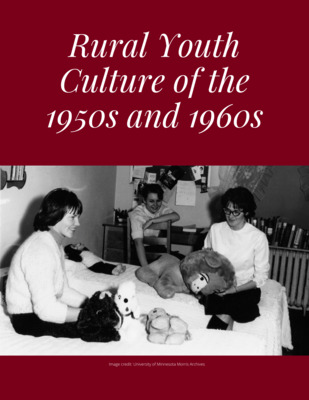
Linda Krogsrud discusses her childhood in the 1950s and '60s on a farm nine miles east of Ortonville, MN.
-

William P. Larkin Interview, 1980
William P. Larkin
In this interview, William Larkin discusses life in Graceville, MN during World War II. Mr. Larkin ran a trucking business at the time. Mr. Larking was born in September of 1898.
-
Victor Larson and Oscar Scholquist Interview, 1972
Victor Larson and Oscar Scholquist
In this interview, Victor Larson discusses the history of his family's settlement in the area, farming, and the Elim Lutheran Church in Clinton, Minnesota.
In this interview, Oscar Scholquist discusses early automobiles and some of his reminiscences of the area.
-

Greg Lockwood Interview, 2025
Greg Lockwood and Jason Frank
Greg Lockwood discusses his business Ortonville Mercantile and Gallery in Ortonville, Minnesota.
-
Alvah Matthews Interview, ca. 1972
Alvah Matthews
In this interview, Alvah Matthews discusses her personal history, family history, and remembrances of early Big Stone County.
-
Agnes Nelson Interview, 1976
Agnes Nelson
Agnes Nelson's parents were born in Sweden and emigrated to the United States in March 1882. They settled in Atwater Minnesota (Kandiyohi County) for six years before moving to Big Stone County in 1888 where they farmed. She was among nine children; one died in infancy. Following her education in a rural elementary school and high school in Ortonville, Agnes Nelson taught in the rural schools. In 1934, she ran for superintendent of the rural school system in Big Stone County and won. This career occupied much of her life until 1958 when she resigned. She did some teaching with special needs children early in the 1960s.
Since much of her life was involved with rural education in Big Stone County, this became the central focus of the interview. A rather complete outline of her career as a teacher, and later, her accomplishments as a superintendent are provided. Agnes Nelson delved into her own growing years in a rural school, her parents' philosophy of education and the experience of alternating the Swedish language and English between home life and school. Much of Agnes' philosophy on education is reflected in the interview; both in terms of how she taught and a critique of elementary and secondary education at the time of the interview.
-
Wesley Olson Interview, 1976
Wesley Olson
Wesley Olson is 33 years old and was born and lived in Clinton all of his life. His occupations are farming and being a substitute high school teacher with an emphasis on speech and political science. He farmed most of his life, before going to the University of Minnesota Morris to get his teaching degree.
In this interview, Wesley discusses farming, government grain storage, and problems in farming past and present.
-
John O'Neil Interview, ca. 1978
John O'Neil
John O'Neil was 90 years old and a lifetime resident of Beardsley. HIs parents came from Ireland and homesteaded in 1878 the farm John O'Neil still lived on.
In this interview, John discusses homesteading in Minnesota. He also discusses changes in farming and the fact that his family held on to their farm for 100 years.
-
Joseph Petrick Interview, 1976
Joseph Petrick and Hazelle Petrick
Joseph Petrick was born in Ortonville in 1901. He enlisted in the army in 1917, but did not go overseas at that time. Later, he joined the National Guard and stayed with them until the 1950s. Athletics were an important part of his early life and he was involved with championship football and basketball teams in high school. He later coached a women's basketball team during the 1920s. From 1927-1969 he served as a rural postman. Joseph and Hazelle have raised 2 children.
In this interview, Joseph Petrick discusses growing up in Ortonville, his high school experiences, Hamline University, and his marriage. He enjoyed talking about athletics in his early life, experiences at a variety of jobs, including as rural postman in Big Stone County, and his years in the National Guard, particularly during World War II. He also briefly discusses Ortonville during World War I, including enlistment and anti-German sentiments.
-

Jay Ross Interview, 2025
Jay Ross and Jason Frank
Jay Ross discusses his childhood in the 1950s in Ortonville, Minnesota.
-
August Schmidt Interview, ca. 1977
August Schmidt
August Schmidt was 83 years old and was born in Illinois in 1893. His family moved to Minnesota when he was 7 years old in hopes of making a better life.
In this interview, he discusses life on the farm and changes in farming. He also talks about the shoe shop he ran for 10 years in Clinton, Minnesota and getting electricity on his farm. He talked about county fairs and one year when he brought bees to the county fair. Finally, he talked about playing the fiddle.
-
Mary Schumaker Interview, 1973
Mary Schumaker
Mary Schumaker was born in 1888 and was a teacher and principal in Ortonville, Minnesota.
In this interview, Mary Schumaker discusses her family history, teaching, social and intellectual activities, the chautauquas in Ortonville, the G.A.R., Ortonville and the railroad, World War I and German citizen repression, storms, the Depression, and Lawrence Welk.